

.jpg)
Polyphenols arenaturally occurring compounds found in colourful fruits, vegetables, beans,tea, coffee and cocoa. Over the past decade, large cohort studies andsystematic reviews have linked higher daily polyphenol intake with lowerinflammation, improved vascular health and reduced risk of long-term mortality(Del Bo et al., 2019; Taguchi et al., 2020). For swimmers, who repeatedlyexpose their muscles, lungs and immune system to training stress, polyphenolsprovide a meaningful nutritional advantage.
Althoughtraining-induced oxidative stress is a normal driver of adaptation, excessiveor poorly recovered sessions can increase inflammation, soreness and fatigue.Polyphenols influence this process not only through antioxidant effects but bymodulating key cellular pathways involved in inflammatory signalling,endothelial function and mitochondrial efficiency (Rodriguez-Mateos et al.,2021). Recent work suggests that higher polyphenol intakes are associated withslower biological ageing markers in healthy adults, reinforcing their long-termvalue (Esposito et al., 2021).
For swimmers, thepractical benefits lie in recovery and consistency: better vascular blood flow,reduced muscle damage, improved immune defence, and more stable energy levelsacross phases of intense training. Evidence in athletes also indicates improvedperceived recovery and reduced muscle soreness when consuming higher-polyphenolfoods consistently (Ruszkowska & Drygas, 2024).
The most effectiveapproach is not a single supplement, but a daily dietary pattern rich in plantfoods. Polyphenols are rapidly metabolised and cleared, meaning swimmersbenefit most from intake spread across the day. This can be achieved bycombining berries or apples at breakfast, legumes and vegetables at lunch, andvegetables, herbs and spices in the evening meal, alongside strategic snacksbefore or after training.
Major dietary sourcesinclude berries, apples and pears (especially with skin), onions, kale,broccoli, beans and lentils, nuts, seeds, herbs, spices, and green or blacktea. Observational research suggests that intakes above approximately 600mg/day are associated with reduced inflammatory markers and lower mortalityrisk (Rodriguez-Mateos et al., 2021; Taguchi et al., 2020; Del Bo et al.,2019). In practical terms, this equates to around five to nine servings offruits and vegetables per day, plus regular legumes, nuts and tea or coffee forolder athletes.
For swimmers atSwimmers Clinic, the goal is simple: develop a consistent, high-polyphenoleating pattern that supports faster recovery, higher training quality andhealthier long-term adaptation.
• 150 g mixed berries
• 150 g Greek yoghurt
• 1 tablespoon ground flaxseed
• A handful of almonds
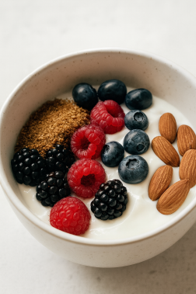
Ideal immediatelyafter training or between double sessions.
Del Bo, C., Bernardi,S., Marino, M. et al. (2019) ‘Polyphenol intake and health outcomes: systematicreview of cohort studies’, Nutrients, 11(5), p.1039.
Esposito, S.,Gialluisi, A., Costanzo, S. et al. (2021) ‘Dietary polyphenol intake andbiological ageing: Moli-Sani Study’, Nutrients, 13(5), p.1701.
Rodriguez-Mateos, A.,Khaw, K-T., Garcia-Conesa, M.T. et al. (2021) ‘Dietary (poly)phenols andcardiometabolic health: mechanisms and implications’, Proceedings of theNutrition Society, 80(2), pp.251-269.
Ruszkowska, J. &Drygas, W. (2024) ‘Berry-derived polyphenol supplementation and exerciserecovery’, Antioxidants, 13(12), p.1561.
Taguchi, C.,Kishimoto, Y., Fukushima, Y. et al. (2020) ‘Total polyphenol intake andmortality risk in Japanese adults’, European Journal of Nutrition, 59,pp.1263-1271.
.png)